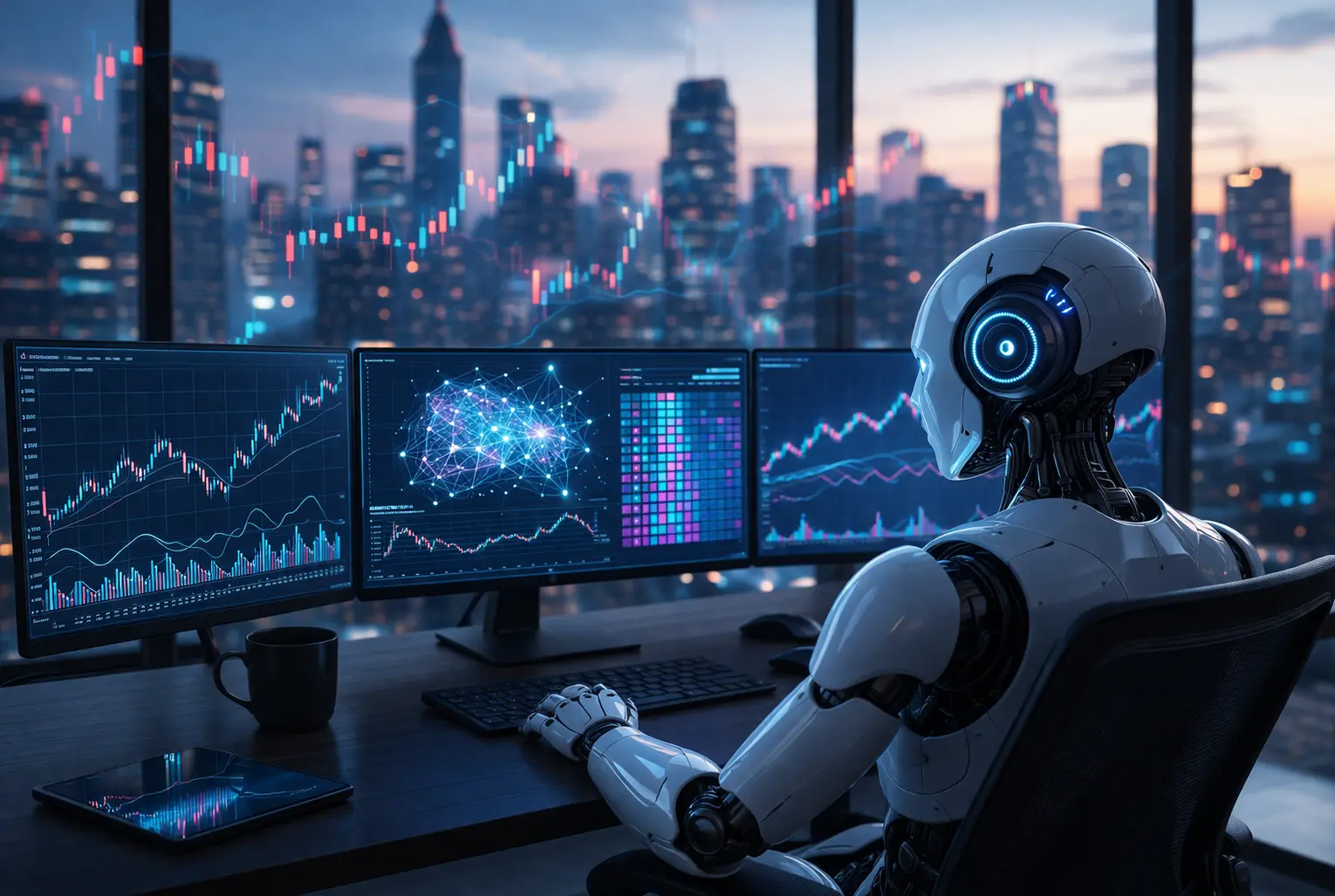
Meta Description: Explore how AI trading automation transforms manual decisions through real-time analysis, faster execution, risk controls, and smarter trading strategies.
Financial markets have become increasingly complex, with prices reacting to economic announcements, investor sentiment, global developments, and changing supply and demand. For traders, keeping track of every movement while making timely decisions can be challenging. Traditional trading often requires hours of chart analysis, market research, and manual order placement. Artificial intelligence is changing this process by introducing tools that can analyze information and execute predefined strategies with greater speed and consistency.
AI trading automation brings data analysis and trade execution together in a connected system. Rather than relying entirely on human observation, traders can use intelligent software to identify potential opportunities, monitor market conditions, and manage orders according to selected rules. This shift does not remove the need for human judgment, but it changes how traders organize their daily activities.
How AI Trading Automation Is Changing Traditional Workflows
Manual trading involves several separate activities. Traders research assets, study technical indicators, monitor price movements, decide when to enter or exit positions, and submit orders through an exchange or brokerage platform.
Automation can simplify many of these steps by connecting analytical tools with execution systems.
From Manual Market Research to Automated Analysis
AI-powered software can process different types of market information, including historical prices, trading volume, technical indicators, and selected economic data. Machine learning models can examine these inputs to identify patterns and generate signals.
For example, a trader monitoring several cryptocurrency pairs may find it difficult to recognize every change in momentum. An automated system can monitor those markets simultaneously and highlight conditions that match the trader’s strategy.
This saves time spent reviewing charts and allows traders to concentrate on evaluating important signals rather than collecting information manually.
Turning Trading Rules Into Executable Instructions
Once a trading strategy has been established, automation can translate its conditions into instructions.
A simple strategy might involve entering a position when a particular moving average crosses another and closing it when a predefined exit condition appears. The software monitors the relevant indicators and submits orders when the required conditions are satisfied.
This approach reduces dependence on constant screen monitoring and helps maintain consistency between trading decisions and execution.
Faster Execution and More Consistent Order Management
Timing can influence trading results, particularly in markets where prices change quickly. Manual traders may hesitate, miss opportunities, or struggle to place orders during periods of intense activity.
Automated systems can respond to predefined conditions without requiring someone to manually approve every routine transaction.
Reducing Delays Between Signals and Orders
An integrated platform can connect market analysis with order placement. When its conditions are met, it can send an instruction directly to a supported exchange or brokerage.
For instance, if an asset reaches a predetermined entry level, the system may submit a buy order automatically. Depending on the platform, traders can choose market orders, limit orders, or other supported order types.
Execution speed still depends on network conditions, exchange performance, liquidity, and API reliability. Automation cannot guarantee that every order will execute at the expected price.
Maintaining Consistent Trading Discipline
Emotions can influence decisions, especially when markets experience sudden gains or losses. Traders sometimes close positions too early because of fear or hold losing trades because they expect a recovery.
Rule-based automation helps reduce these inconsistencies by following predefined instructions. However, the quality of the outcome depends on the strategy itself. Poorly designed rules can produce repeated mistakes just as consistently as well-designed ones can support disciplined execution.
Risk Management Remains Central to Automated Trading
Automation should not focus exclusively on finding profitable opportunities. Managing potential losses is equally important, particularly when software can place multiple orders without continuous human involvement.
Setting Position Limits and Stop-Loss Rules
Reliable AI trading automation should offer practical risk management features. These may include maximum position sizes, stop-loss orders, daily loss limits, and restrictions on total portfolio exposure.
Consider a trader who allocates capital across several digital assets. Instead of allowing every strategy to use the full available balance, the trader can establish individual exposure limits.
Such restrictions help prevent excessive concentration and provide clearer boundaries for automated activity.
Monitoring Unexpected Market Conditions
Markets do not always behave according to historical patterns. Sudden regulatory announcements, exchange interruptions, or unexpected economic developments can make an existing strategy unsuitable.
A responsible automated system should provide monitoring tools, alerts, and options to pause trading. Human supervision remains important when market conditions move beyond the assumptions used to design a strategy.
The Importance of Reliable Data and Platform Integration
AI models depend on accurate information. If a system receives delayed prices, incomplete market records, or inconsistent data, its analysis may become unreliable.
Connecting With Dependable Market Sources
Trading platforms should explain where their market information comes from and how frequently it is updated. Traders should also check whether the system supports the exchanges, assets, and trading pairs they intend to use.
Data consistency is particularly important when strategies depend on short-term price movements.
Secure Exchange and API Connections
Automated trading often requires API access to an exchange or brokerage account. These connections allow software to retrieve account information and submit trading instructions.
Users should apply restricted API permissions, disable withdrawal access where possible, and protect their credentials. Strong authentication and regular permission reviews can further reduce security risks.
Choosing the Right Level of Automation
Not every trader needs a completely automated system. Some prefer using AI for research while keeping final control over order placement. Others may choose to automate specific parts of their strategies.
The right approach depends on experience, available time, risk tolerance, and trading objectives.
Before committing real funds, traders should consider:
- Backtesting: Evaluate how a strategy performed using historical data.
- Paper trading: Test execution rules without risking actual capital.
- Performance tracking: Review fees, slippage, drawdowns, and completed transactions.
- Transparency: Understand how signals are generated and what limitations exist.
- Manual controls: Ensure the ability to pause automation or close positions when necessary.
Testing helps reveal weaknesses before a strategy is used in live market conditions.
Conclusion
AI trading automation is transforming financial market participation by connecting analysis, decision-making, and execution within a more organized workflow. It can reduce repetitive tasks, improve consistency, and help traders monitor multiple opportunities without constantly watching their screens.
However, automation is not a shortcut to guaranteed profits. Its effectiveness depends on data quality, strategy design, execution reliability, and responsible risk management. Traders who combine intelligent software with careful testing and human oversight are better positioned to use automation as a practical tool rather than relying on technology without understanding its limitations.